Why more creatives, entrepreneurs, and international residents are choosing to relocate to San Miguel de Allende.
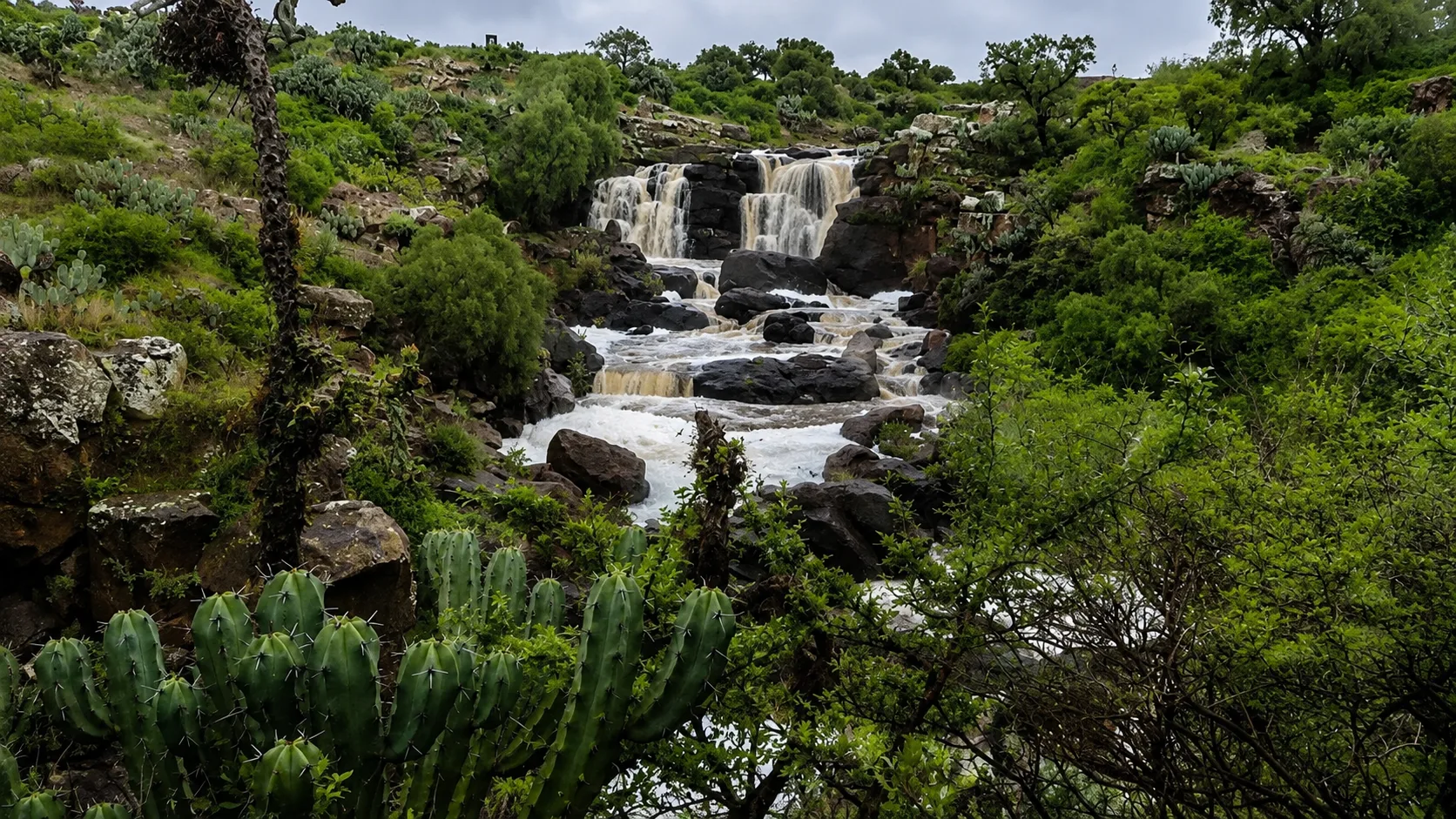
At eight in the morning, the sun is already rising over the semi-desert hills surrounding San Miguel de Allende.
In El Charco del Ingenio, someone walks quietly along dirt trails as the first light touches the cactus landscape and canyons.
A few minutes away, in the historic center, a designer finishes their coffee before joining a video call with clients in Mexico City.
An artist opens the doors of their studio in Fábrica La Aurora.
An architect reviews plans for a new residence in the hills surrounding the city.
None of them were born in San Miguel de Allende.
But all of them chose to build a life here.
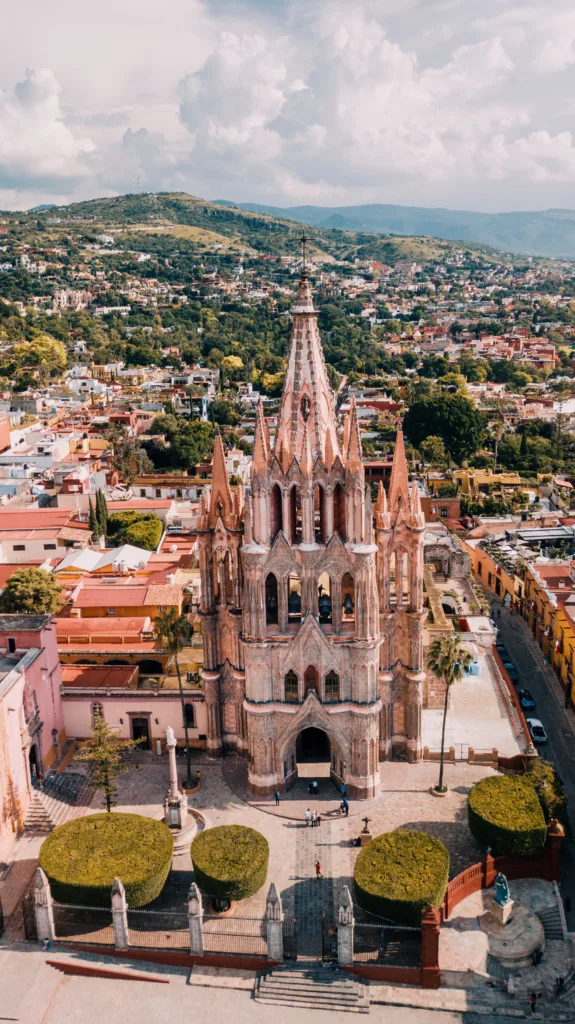
For years, San Miguel was known for its colonial architecture, privileged climate, and ability to attract visitors from around the world.
But that version of the city is no longer enough to explain what is happening.
Something deeper is emerging.
Increasingly, people are choosing not only to visit San Miguel de Allende, but to relocate here and build long-term lives.
A small city is beginning to attract people who, not long ago, might have chosen Brooklyn, Austin, or certain neighborhoods in Madrid.
Not because it resembles them.
But because it offers something many large cities are losing: human-scale living combined with a rich cultural life.
A City Where Conversations Still Matter
In large cities, social life is often fragmented.
Schedules fill before conversations even happen.
In San Miguel, things still unfold differently.
A visit to Fábrica La Aurora is rarely just a visit. Between galleries and studios, conversations naturally emerge between artists, designers, entrepreneurs, collectors, and residents.
The city encourages conversation.
It does not schedule it.
And that changes the kind of community that forms.
A dinner at Bekeb or an evening at Tunki can bring together architects, investors, creatives, entrepreneurs, and visitors already considering a move to San Miguel.
San Miguel functions less like a large city and more like a network.
The Ecosystem Reshaping the Cityaping the City
The most interesting thing about San Miguel is not any single place.
It is the accumulation of places sharing a similar sensibility.
Fábrica La Aurora has become one of the most important art and design centers in Mexico, serving as a hub where artists, architects, collectors, and developers connect.
A new generation of hospitality and cultural spaces is helping shape the city’s identity. Bekeb, Tunki, Atrium San Miguel, Casa Dragones Tasting Room, and Selina each contribute to an environment where creativity, entrepreneurship, and community intersect.
These are not isolated success stories.
Together, they signal something larger:
a city that is no longer simply a destination, but an emerging creative ecosystem.
The Luxury of Living in San Miguel de Allende
For decades, luxury was defined by expansion.
More space.
More distance.
More separation.
Today, it is increasingly defined differently.
Time.
Time to walk.
Time to create.
Time to connect.
Time to live without friction.
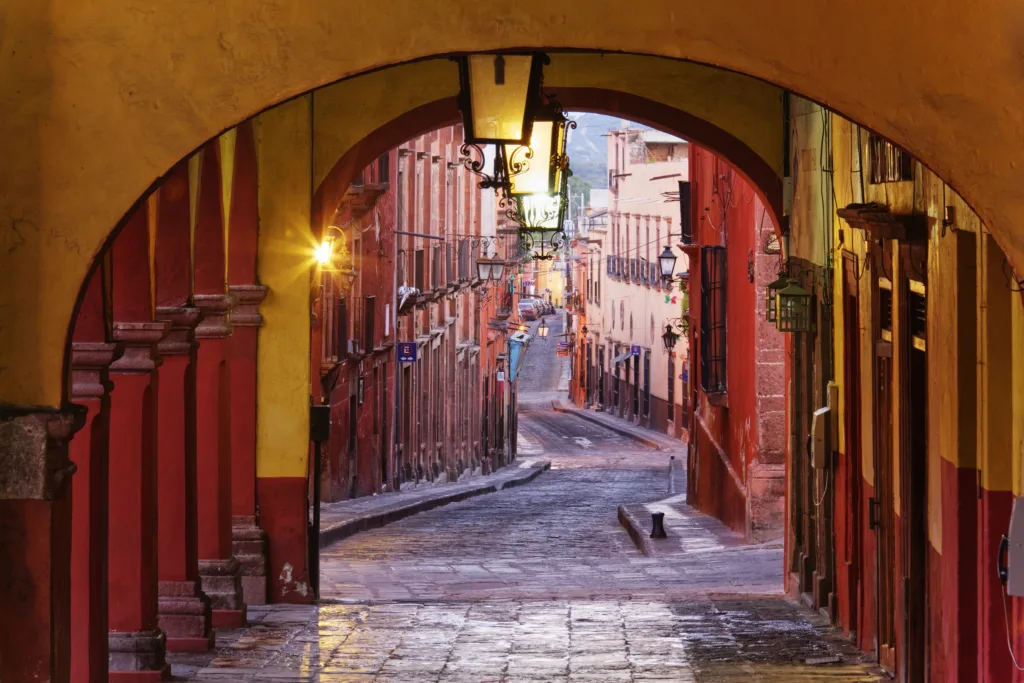
In a single day, it is possible to walk through El Charco del Ingenio, work with international clients from the historic center, and end the evening on a terrace with live music.
No traffic.
No long commutes.
No fragmentation of the day.
Nature as Part of Everyday Life
One of San Miguel’s most overlooked strengths is its relationship with nature.
Beyond the historic center lie trails, vineyards, equestrian routes, and expansive semi-desert landscapes.
El Charco del Ingenio serves as a transition between city and open landscape, while the surrounding areas offer silence, scale, and open horizons.
Here, nature is not an escape.
It is context.
Music, Art, and Life After Dinner
For a city of its size, San Miguel maintains a remarkably active cultural scene.
Places like Raindog Lounge, Dean Martinis House of Blues, and Foro El Obraje are more than venues.
They are gathering places where music, art, conversation, and community continue long after the workday ends.
Why More People Are Relocating to San Miguel de Allende
People do not move to San Miguel for what they see on a weekend visit.
They stay for what they discover afterward.
The quality of relationships.
The ease of belonging.
The ability to know the people behind the projects they admire.
And the realization that life can be structured differently.
This points to the city’s most important transformation.
The story is no longer tourism.
It is relocation.
Artists who once lived in Mexico City.
Entrepreneurs running global businesses.
Architects, designers, investors, and creative professionals who could live almost anywhere in the world.
But are increasingly choosing San Miguel de Allende.
Not as an alternative.
But as an evolution.
As more people relocate, the city is gradually evolving from a world-class destination into a place where individuals, families, entrepreneurs, and creatives are building long-term lives.
Why More People Are Relocating to San Miguel de Allende
San Miguel de Allende is not trying to become Brooklyn, Austin, or Madrid.
But it is increasingly resembling what those cities once represented:
places where creativity, community, and daily life could coexist without competing for space.
For those considering a move, a second home, or a long-term investment in Mexico, that combination is becoming increasingly difficult to find elsewhere.
And in today’s world, that is starting to feel like an exception.